









WHAT IS TPE?

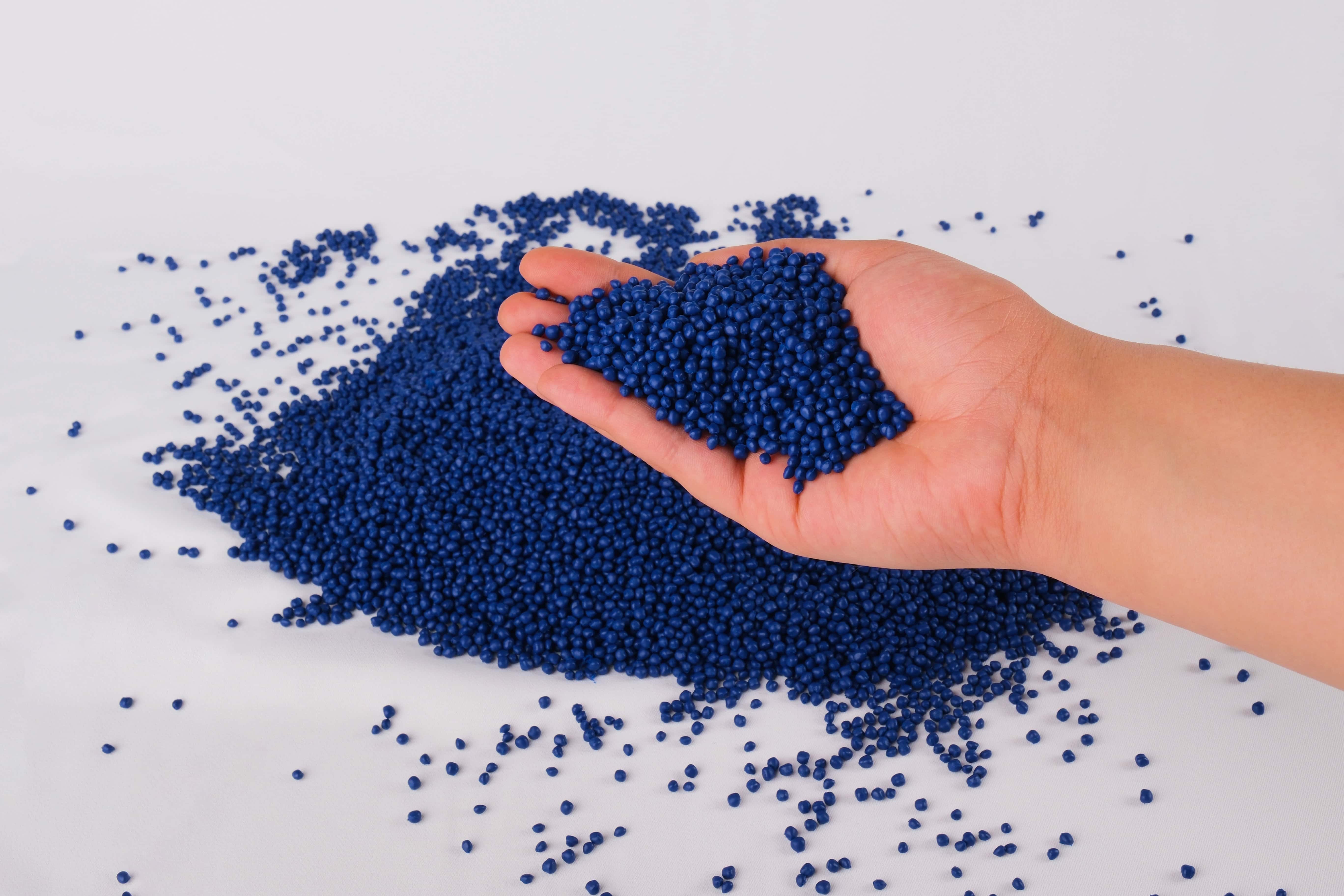
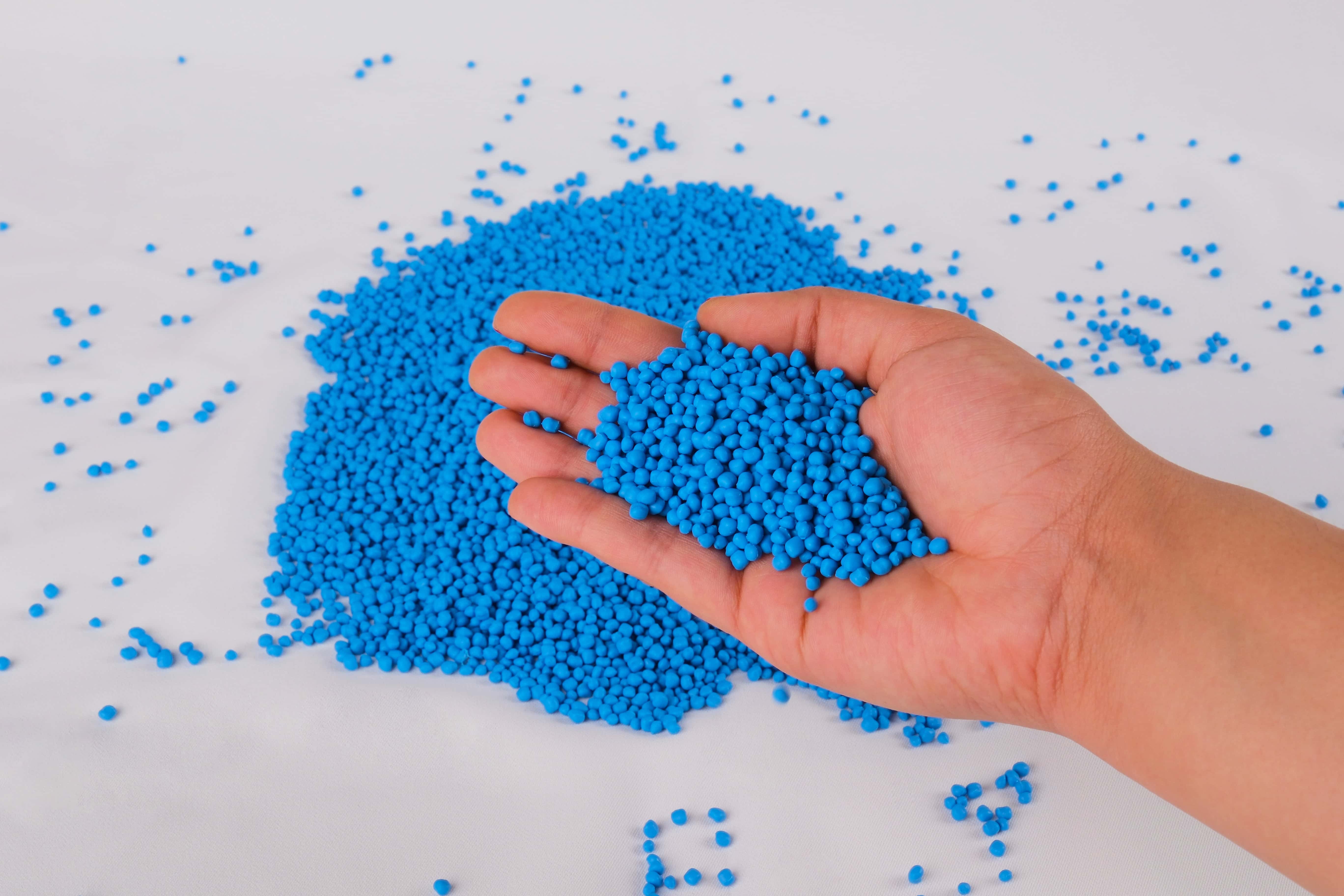
Thermoplastic elastomers (TPEs) are rubber-like materials that combine the elastic properties of conventional rubbers with the processing advantages of thermoplastics. Unlike vulcanized rubbers, TPEs do not require curing or vulcanization during processing. They can be melted, shaped, and reprocessed using conventional thermoplastic processing methods such as injection molding, extrusion, and blow molding.

What is a Polymer?

It is necessary to explain some basic points before providing detailed information about Thermoplastic Elastomers (TPE).

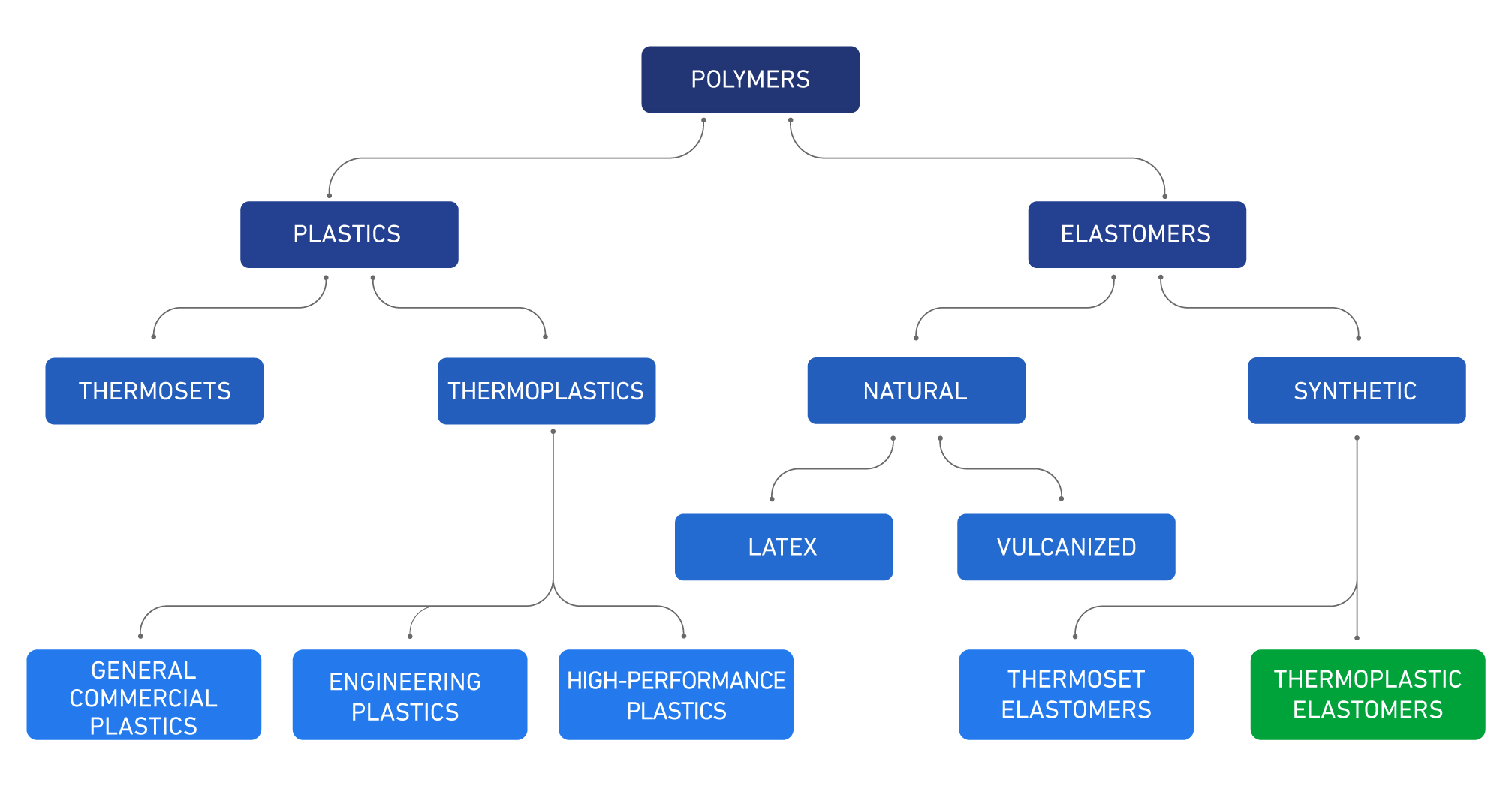
A polymer is a large molecule made of repeating small and simple chemical units. They are classified as follows according to their formation ability. TPEs (thermoplastic elastomers) belong to the elastomer class.

TPEs: Bridging Plastics and Rubbers

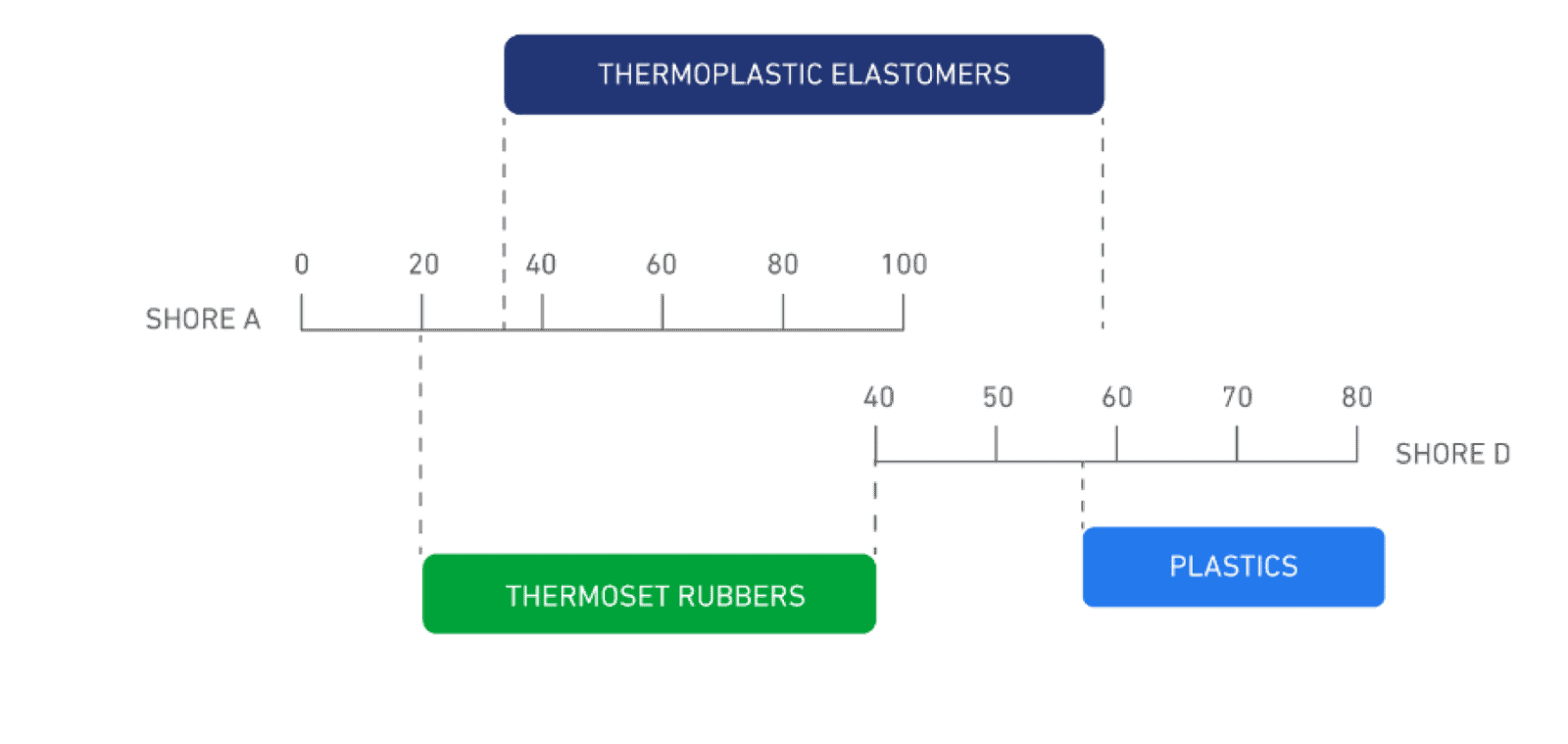
Before the introduction of thermoplastic elastomers (TPEs), there was a clear distinction between rubbers and plastics. Rubbers are soft, flexible, and elastic, whereas plastics are typically hard and rigid. TPEs can be processed and recycled like thermoplastics while providing properties and performance similar to those of thermoset rubbers. Due to their broad property range, TPEs are commonly classified according to hardness.

Classification of TPEs

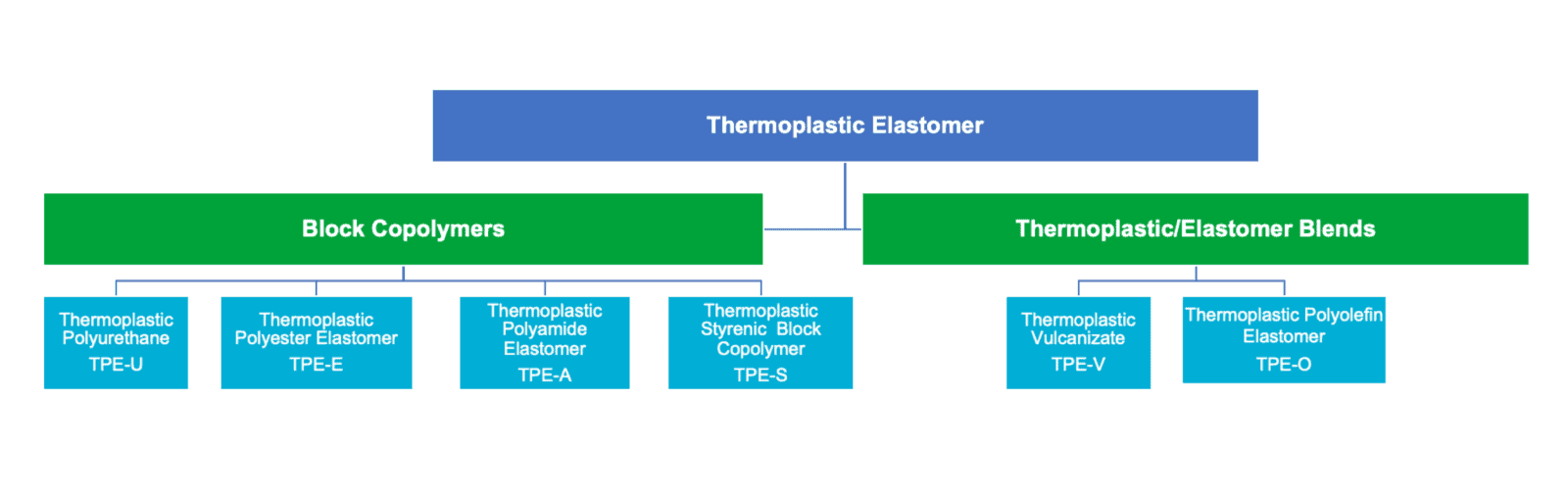
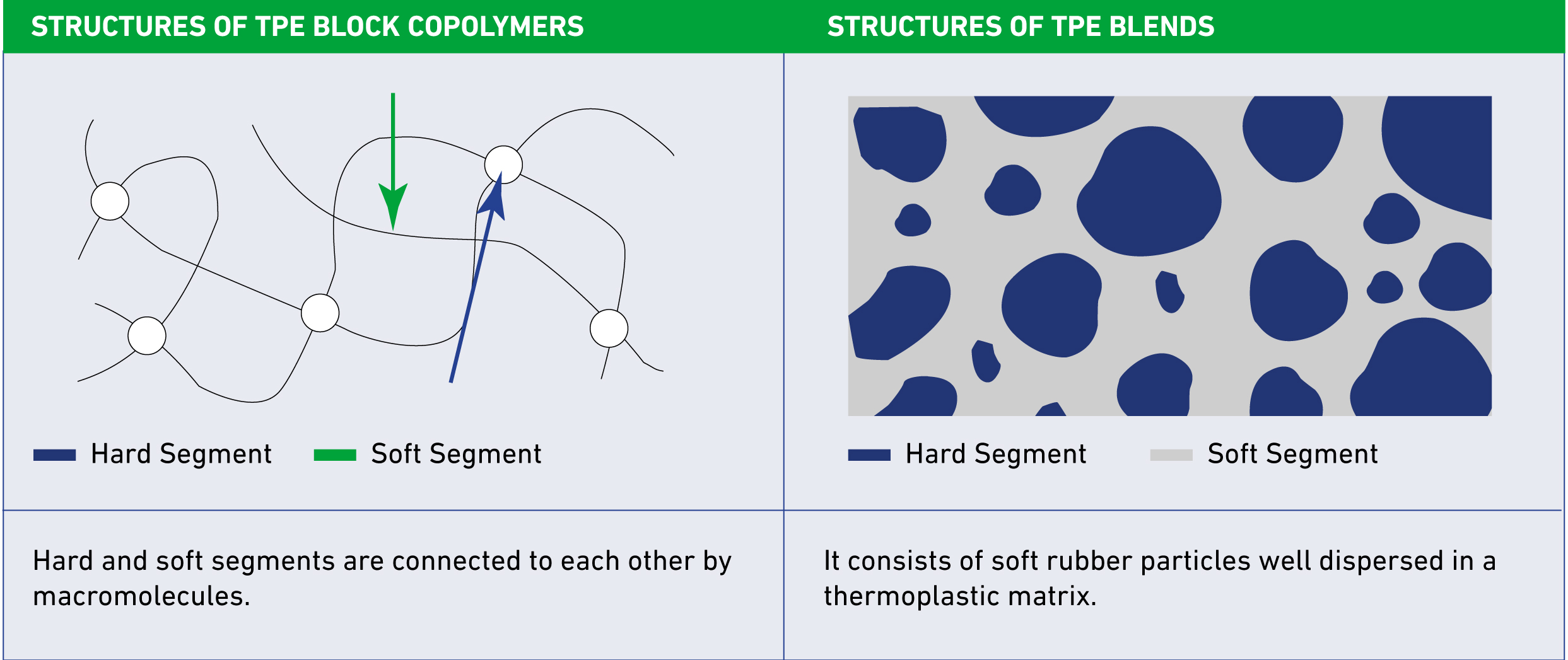
From a structural perspective, TPEs can be broadly categorized into two groups: block copolymers and thermoplastic/elastomer blends.
Block copolymer-based TPEs consist of two or more chemically distinct polymer segments linked within the same polymer chain. The combination of hard and soft segments provides both thermoplastic processability and elastomeric behavior.
Thermoplastic/elastomer blends, on the other hand, are produced by melt blending thermoplastic and elastomeric components, resulting in a two-phase morphology that combines the characteristics of both materials.

Morphology of TPEs

All thermoplastic elastomers (TPEs) contain at least two polymeric phases: a hard phase and a
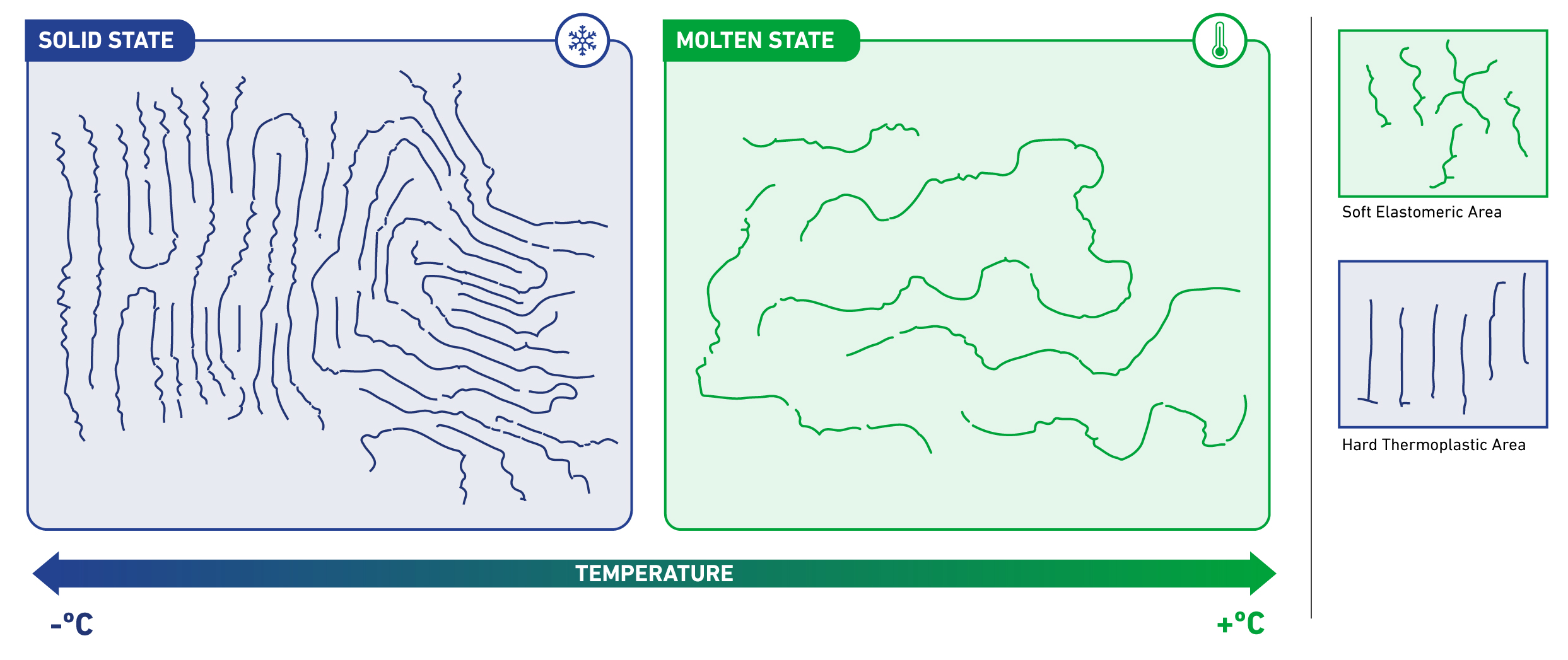
soft phase. In the solid state, below the softening or transition temperature, the hard segments aggregate to form physically crosslinked domains that provide structural integrity, while the soft segments form an elastomeric matrix responsible for flexibility and elasticity.

In block copolymer-based TPEs, heating above the softening or melting range of the hard domains disrupts these physical associations, allowing the material to flow and be processed by methods such as injection molding, extrusion, or other thermoplastic techniques.

Upon cooling below the transition temperature, the hard segments reassociate and reform physical crosslinks, restoring the elastomeric structure and the final molded shape.

Hard segments provide plastic properties
  • Thermal resistance
  • Easy processing
  • Mechanical properties
Soft segments provide elastic properties
  • Resistance to deformation
  • Elasticity
  • Low temperature performance
Advantages of TPEs

Advantages of TPEs

  • 100% recyclable
  • Easy processing
  • No curing required
  • Sort cycle time, energy saving
  • Low density (0.9 g/cm3 )
  • Colorable
  • Can be procesable by blow molding, thermoforming, extrusion and injection molding
  • Suitable for heat welding

General Physical Properties of TPEs

TPE-V
TPE-S
Density (g/cm3)
min. 0,90
min. 0,88
Hardness (Shore A/D)
35A - 65D
0A - 65D
Min Service Temp (°C)
-50
-50
Max Service Temp (unstressed) (°C)
135
120
Compression Set at 100°C
Very Good
Good
Resistance to Aqueous Fluids
Very Good
Very Good
Resistance to Hydrocarbon Fluids
Variable
Variable
Thermoplastic Elastomer Types

Styrenic Block Copolymers (SBCs) are among the most widely used thermoplastic elastomers, combining the flexibility of rubber with the processing efficiency of thermoplastics. Their unique block copolymer architecture creates an excellent balance of softness, elasticity, durability, and design freedom.

SBCs offer outstanding formulation versatility and can be effectively combined with oils, fillers, additives, and compatible polymers to meet a wide range of performance requirements. This adaptability makes them an ideal choice for applications requiring both comfort and functionality.

The performance characteristics of SBCs are primarily determined by the chemistry of their elastomeric mid-block. The most common SBC types include:

  • SBS (Styrene-Butadiene-Styrene) – Excellent elasticity and cost-effective performance.
  • SIS (Styrene-Isoprene-Styrene) – Superior flexibility and adhesive properties.
  • SEBS (Styrene-Ethylene-Butylene-Styrene) – Outstanding weatherability, thermal stability, and long-term durability.

Today, SBC-based compounds are widely used in automotive, consumer goods, healthcare, packaging, electronics, and soft-touch applications
SBS is a widely used styrenic block copolymer known for its excellent flexibility, elasticity, and cost-effective performance. The butadiene-based elastomeric phase provides outstanding softness and resilience, making SBS a preferred choice for a broad range of applications.

Due to the presence of unsaturated double bonds in its molecular structure, SBS is more sensitive to prolonged exposure to UV radiation, oxygen, and elevated temperatures. These environmental factors can lead to gradual material aging over time, limiting its suitability for long-term outdoor applications.

With its excellent processability and versatile performance profile, SBS remains an effective solution for applications where flexibility, comfort, and manufacturing efficiency are key requirements.

On the other hand, SEBS whose soft phase is ethylene butylene, are produced by hydrogenating
SBS. They have very good heat, UV, oil, and chemical resistance due to the lack of double bonds in their structures. SEBS is the most commonly used styrenic block copolymer.

SEBS

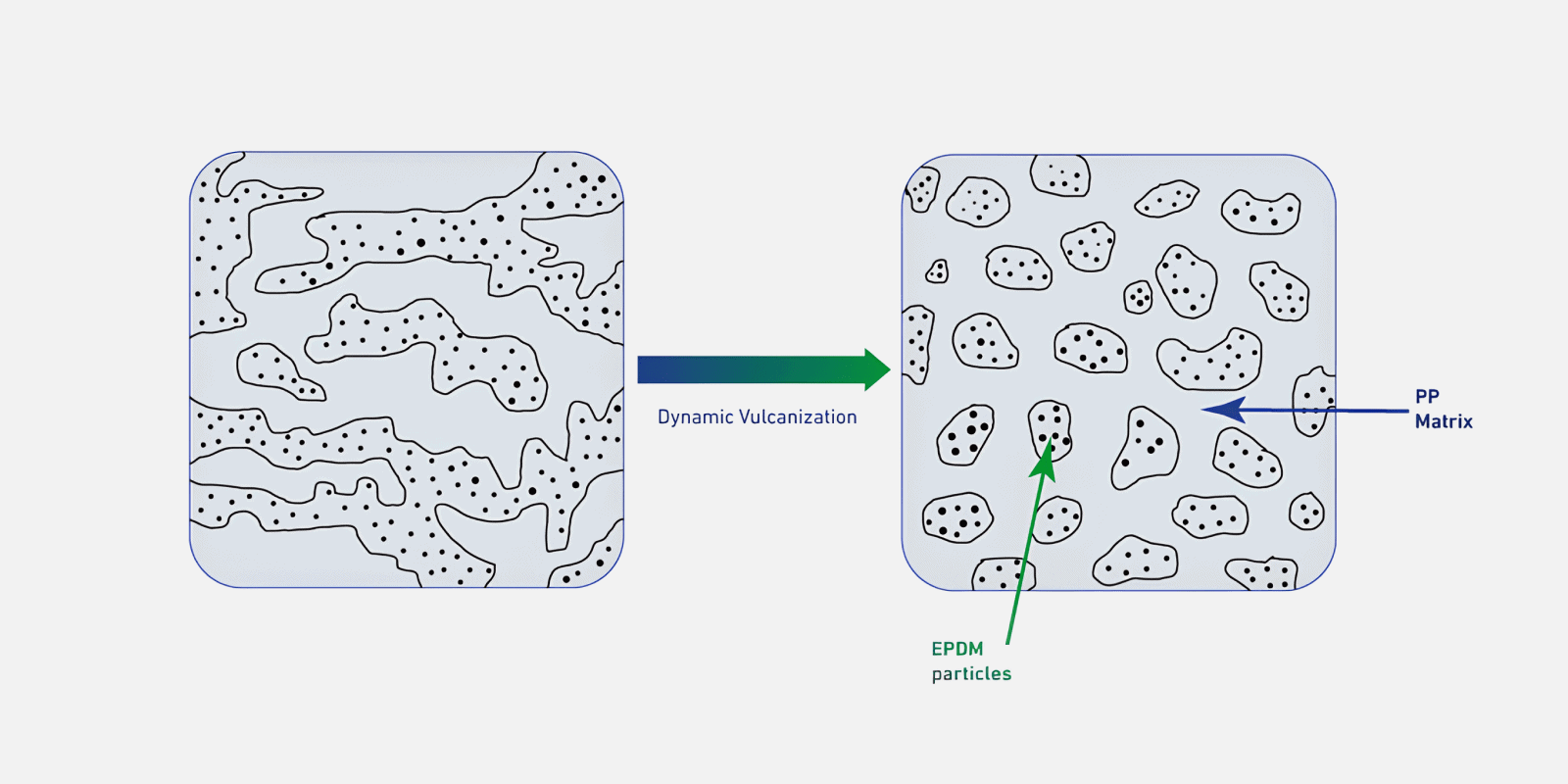
Thermoplastic Vulcanizates (TPVs) are high-performance thermoplastic elastomers produced through a process known as dynamic vulcanization. During this process, finely crosslinked rubber particles are dispersed within a continuous thermoplastic matrix, creating a unique material structure that combines the flexibility of rubber with the processing advantages of thermoplastics.

The dynamic vulcanization process forms a stable microstructure in which the rubber phase is permanently crosslinked while the thermoplastic phase remains processable. This distinctive morphology provides TPVs with an excellent balance of elasticity, durability, chemical resistance, and long-term performance.

Thanks to their outstanding resistance to heat, weathering, and automotive fluids, TPVs are widely used in demanding applications where conventional elastomers may require additional processing steps. Their ability to deliver rubber-like performance together with efficient manufacturing and recyclability makes TPVs a preferred material solution for automotive, industrial, consumer, and infrastructure applications.

Thermoplastic Polyolefins (TPOs) are versatile materials produced by blending polyolefin thermoplastics with elastomeric components in the molten state. Most commercial TPOs are based on polypropylene (PP) and ethylene-propylene rubber (EPR), creating a material that combines lightweight performance with excellent durability.

Unlike TPVs, TPOs do not undergo a vulcanization process. Their physical blend structure provides a balanced combination of flexibility, impact resistance, and ease of processing, making them a cost-effective solution for a wide range of applications.

TPOs offer excellent resistance to impact, chemicals, and environmental conditions while maintaining low density and good aesthetic properties. Their combination of performance, design flexibility, and manufacturing efficiency makes them a preferred choice for automotive, consumer, construction, and industrial applications.

Thermoplastic Polyurethane (TPU) is a high-performance elastomer that combines exceptional flexibility with outstanding mechanical strength. Its unique molecular structure provides an excellent balance of elasticity, abrasion resistance, durability, and aesthetic quality, making TPU one of the most versatile thermoplastic elastomers available.

TPUs offer superior resistance to wear, tear, impact, oils, greases, and many chemicals, while maintaining their performance across a wide range of temperatures. Depending on the formulation, TPU compounds can be tailored to deliver varying levels of hardness, flexibility, transparency, and surface finish.

Thanks to their outstanding mechanical properties, premium appearance, and processing versatility, TPUs are widely used in automotive, consumer goods, electronics, footwear, industrial equipment, and demanding technical applications where long-term performance is essential.

Thermoplastic Copolyesters (TPE-E), also known as Copolyester Elastomers (COPE), are high-performance thermoplastic elastomers that combine the flexibility of rubber with the strength and durability of engineering plastics. Their unique molecular structure consists of hard polyester segments and soft elastomeric segments, providing an exceptional balance of mechanical performance and elasticity.

TPE-Es offer outstanding resistance to heat, fatigue, chemicals, oils, and environmental conditions, while maintaining their flexibility over a wide temperature range. They also exhibit excellent resilience and long-term mechanical stability, making them suitable for demanding applications subjected to repeated stress and dynamic loading.

Thanks to their superior durability, high-temperature performance, and excellent mechanical properties, TPE-Es are widely used in automotive, industrial, electrical, consumer, and mobility applications where reliability and long service life are critical.


Polyamide Elastomers (TPE-As) are high-performance block copolymers based on polyamide and ether or polyester segments. By combining flexible elastomeric domains with durable polyamide-based hard segments, TPE-As deliver an exceptional balance of lightweight performance, elasticity, mechanical strength, and chemical resistance. This unique material architecture makes them an ideal choice for demanding applications where durability, flexibility, and reliability are essential.

TPE-A offer excellent flexibility across a wide temperature range, outstanding fatigue resistance, and superior resistance to chemicals, oils, and environmental conditions. Their low density and high energy return characteristics make them particularly suitable for applications requiring both performance and weight reduction.

Combining excellent mechanical properties with long-term durability and design flexibility, TPE-A are widely used in mobility, sports and leisure equipment, industrial components, consumer products, and other demanding applications where lightweight performance and reliability are essential.

This field is hidden when viewing the form